英语
英语 中文简体
中文简体
Inicio / Noticias / Noticias de la Industria / Soportes de paneles solares para autocaravanas: tipos, materiales y consejos de compra para propietarios
Noticias de la Industria
Sep 25,2026
Soportes de paneles solares para autocaravanas: tipos, materiales y consejos de compra para propietarios
Contenido
- 1 Por qué el techo de una casa rodante es un lugar exigente para montar cualquier cosa
- 2 Los cuatro tipos de soportes utilizados en las autocaravanas
- 3 Materiales, peso y protección contra la corrosión
- 4 Práctica de fijación que mantiene los soportes en el techo
- 5 Solicitar soportes personalizados a un fabricante de estampado de metal
- 6 Una breve lista de verificación de compras
Un panel de 200 W colocado sobre el techo de una autocaravana no pesa casi nada cuando el vehículo está aparcado. A velocidad de autopista, el mismo panel se convierte en un ala que se eleva, se flexiona y traquetea contra una piel de fibra de vidrio o aluminio que a menudo tiene sólo de 1 a 2 mm de espesor. El hardware que los une, los soportes de paneles solares para techos de casas rodantes, decide si el sistema sobrevive a su primer viaje largo o llega a casa con el sellador agrietado y los pernos sueltos. Esta guía establece en qué se diferencian los principales tipos de soportes, qué materiales y fijaciones resisten en la carretera y qué comprobar antes de comprar piezas del catálogo o pedir hardware de montaje personalizado.
Por qué el techo de una casa rodante es un lugar exigente para montar cualquier cosa
Tres fuerzas actúan contra un panel montado en el techo: vibración de la superficie de la carretera, elevación aerodinámica a medida que aumenta la velocidad y ciclos térmicos diarios que mueven el marco del panel contra los soportes. Debido a que la cubierta del techo en sí es delgada, un soporte es tan fuerte como la estructura de respaldo detrás de él, no la fibra de vidrio a través de la cual pasa. El agua es el segundo enemigo, ya que cada penetración debe ser sellada durante la vida útil del vehículo. El siguiente gráfico muestra por qué la elevación merece respeto incluso en sistemas pequeños, utilizando un cálculo ilustrativo para un panel de aproximadamente un metro cuadrado.
Levantamiento estimado versus velocidad en carretera
La elevación crece con el cuadrado de la velocidad, por lo que duplicar la velocidad aproximadamente cuadruplica la carga sobre los soportes. A 60 km/h un panel de un metro cuadrado ya tira hacia arriba con una fuerza cercana a los 11 kg, y a 120 km/h esa cifra se acerca a los 46 kg repartidos en cuatro puntos de fijación. Estas fuerzas parecen pequeñas contra la masa del vehículo, pero actúan sobre una piel delgada y sobre sujetadores cargados por extracción en lugar de por corte. Es por eso que las instalaciones cuidadosas se realizan con pernos pasantes en inserciones de madera contrachapada o tiras de respaldo de metal en lugar de confiar en la piel exterior. También explica por qué los soportes delgados y flexibles que parecen estar bien en el camino de entrada comienzan a aflojarse después de una temporada de viaje por carretera.
Los cuatro tipos de soportes utilizados en las autocaravanas
La mayoría de las instalaciones en carretera utilizan uno de cuatro métodos de montaje. Cada uno se adapta a un tipo de techo, presupuesto y diseño de panel diferente, y las diferencias prácticas son mayores de lo que sugieren las fotografías del producto.
Soportes en Z
Soportes en Z are the default choice for flat, rigid roofs. Each one is a stamped and bent Z-shaped stand-off that lifts the panel about 20 to 30 mm clear of the roof, fixes through the skin, and clamps the panel frame with an M6 or M8 bolt. A set of four holds one panel, costs very little, and keeps the profile low enough to avoid wind noise. The trade-offs are a fixed position, a modest air gap for cooling, and a dependence on careful sealing at every fastener.
Soportes de esquina
Soportes de esquina do the same structural job but stand taller, commonly 30 to 50 mm, which improves airflow under the panel and lowers its operating temperature. They suit flat roofs where a little extra height is acceptable, and they need slightly more attention to sealant and alignment during installation.
Soportes de inclinación ajustables
Los soportes inclinables se articulan en un borde para que el panel pueda elevarse hacia el sol cuando esté estacionado y luego bloquearse en posición horizontal para conducir. Tienen sentido en tejados grandes donde la producción estacional es importante, especialmente en invierno o en latitudes más altas. Las bisagras, los pasadores de bloqueo y la postura más alta añaden costo y peso, y la cerradura debe resistir vibraciones sostenidas, por lo que la calidad del hardware importa más aquí que con los soportes fijos.
Sistemas de rieles y abrazaderas
Los sistemas de rieles atornillan o unen uno o dos rieles longitudinales al techo y sujetan los marcos de los paneles con abrazaderas intermedias y finales. Manejan perfectamente techos curvos y conjuntos de paneles múltiples y distribuyen bien las cargas. Los costos son un mayor precio del hardware, un mayor tiempo de instalación y más elementos para sellar e inspeccionar.
| Tipo de montaje | Posición típica del panel | El techo más adecuado | Vigilancias principales |
|---|---|---|---|
| Soportes en Z | Fijo, plano contra el techo | Techos de fibra de vidrio planos o suavemente curvados con acceso posterior | La separación corta limita el flujo de aire debajo del panel |
| Soportes de esquina | Fijo, ligeramente elevado | Techos planos donde una cámara de aire más alta ayuda a enfriar | Líneas de herrajes y selladores más visibles |
| Soportes de inclinación ajustables | Fijo o inclinable para el ángulo del sol. | Grandes tejados donde la ganancia estacional importa | Mayor costo y peso, la cerradura debe resistir la vibración |
| Sistemas de rieles o abrazaderas | Fijo, panel sujeto a rieles | Techos curvos y matrices de paneles múltiples | Mayor costo y mayor tiempo de instalación |
Costo típico de hardware por panel
Las barras comparan el costo típico del hardware para montar un panel de 100 W, con cifras que son precios de calle ilustrativos en lugar de cotizaciones. Los soportes en Z siguen siendo los más baratos porque un juego consta de cuatro pequeños estampados y un puñado de tornillos. Los soportes de esquina agregan altura y material por una prima modesta, mientras que los soportes inclinables cuestan varias veces más una vez que se incluyen las bisagras y las cerraduras. Los kits de rieles se ubican en la parte superior porque combinan rieles, abrazaderas y muchos más sujetadores. Dado que el hardware representa una pequeña parte del precio total del sistema, rara vez vale la pena ahorrar en esta etapa, porque un montaje fallido generalmente daña el panel y el techo juntos.
Donde gana cada tipo de montaje
El cuadro de mando condensa las compensaciones en seis atributos puntuados desde 1 en el centro hasta 5 en el borde, lo que refleja el comportamiento típico del producto en lugar de una marca única. Los soportes en Z lideran en costo y bajo perfil, razón por la cual dominan los techos pequeños de un solo panel. Los soportes inclinables ofrecen economía para la capacidad de ajuste y el mejor flujo de aire, al precio de la altura y el dinero. Los sistemas de rieles obtienen la puntuación más alta en seguridad contra vibraciones porque las abrazaderas distribuyen la carga a lo largo de todo el marco, pero ocupan el lugar más bajo en costo y velocidad de instalación. Ningún tipo gana en todos los ejes, por lo que la elección sensata es aquella cuyos ejes débiles importan menos para el techo, la ruta y la cantidad de paneles involucrados.
Materiales, peso y protección contra la corrosión
El material del soporte decide cómo la pieza sobrevive al sol, la lluvia y las carreteras saladas del invierno. El acero inoxidable austenítico 304 es la opción de larga duración para uso costero y en cualquier clima, mientras que el aluminio 5052 o 6061 mantiene el peso bajo y nunca se oxida, aunque es más suave en los puntos de fijación. El acero galvanizado y con recubrimiento en polvo sigue siendo la opción económica para la producción en volumen y funciona bien cuando el recubrimiento se aplica sobre una superficie pretratada adecuadamente. El espesor importa tanto como el grado, porque los soportes estampados para paneles de hasta aproximadamente 200 W suelen utilizar láminas de 2 a 3 mm, y cualquier material más delgado tiende a flexionarse en los orificios de los pernos. Nuestra visión general de cómo elegir materiales adecuados para piezas de estampado de metal explica esta lógica de selección con más detalle.
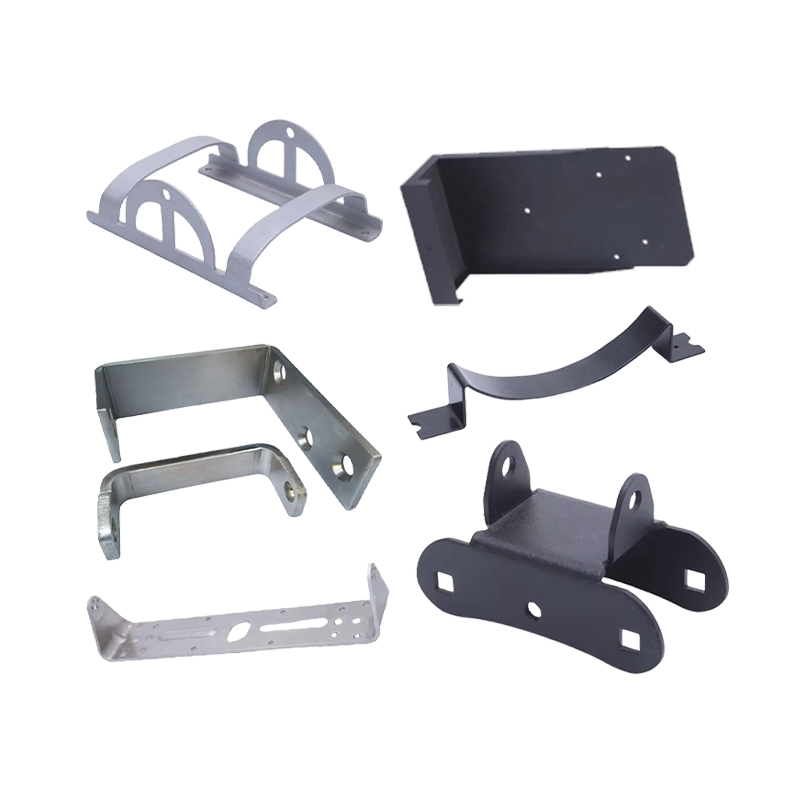
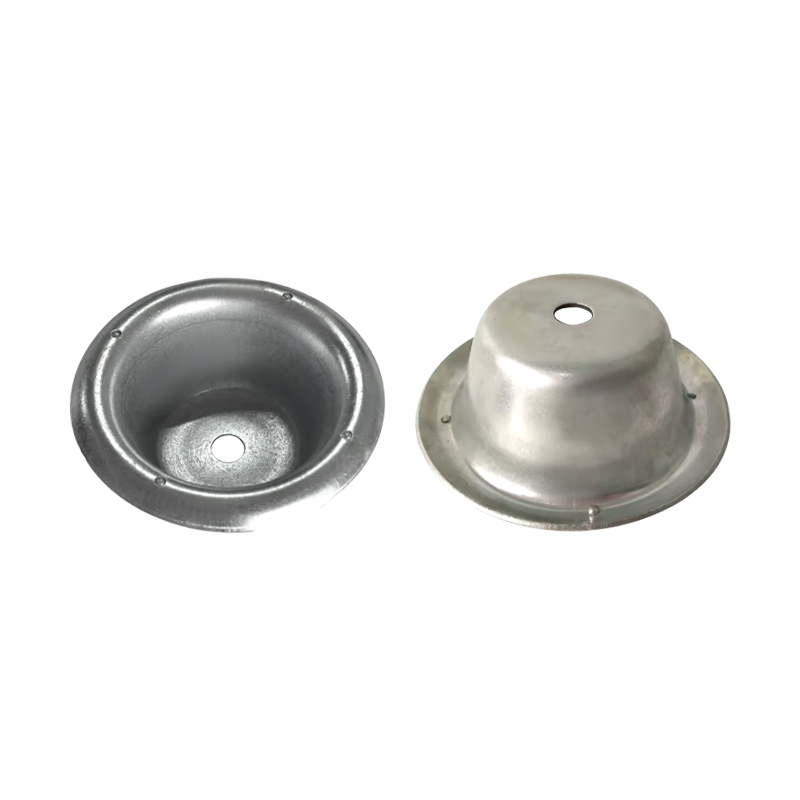 Soportes de conexión de tubería estampados de chapa de precisión Soportes estampados en acero al carbono, inoxidable, aluminio y otros metales con enchapado, recubrimiento en polvo o anodizado. Es relevante aquí porque la calidad del material, el recubrimiento y el espesor de 2 a 3 mm determinan cómo los soportes de montaje en panel resisten la intemperie, la sal y la tensión de los orificios de los pernos. Ver producto →
 Vale la pena comprobar un detalle electroquímico. Los marcos de paneles de aluminio sujetos con tornillos inoxidables desnudos pueden sufrir un ataque galvánico en la cara de contacto con el paso de los años, por lo que la utilización de arandelas aislantes o un revestimiento compatible entre los metales prolonga la vida útil de ambos. La misma lógica se aplica a cualquier soporte revestido, porque un rasguño que deja al descubierto el acero desnudo se convierte en el primer lugar donde comienza la oxidación.
Peso de un juego de montaje completo
La carga útil del techo de una autocaravana es finita y los accesorios de montaje forman parte de ella. Un juego de soportes en Z de aluminio de cuatro piezas añade sólo unos pocos cientos de gramos, por lo que domina las instalaciones de un solo panel. Las versiones de acero inoxidable con la misma geometría pesan aproximadamente el doble porque la aleación es mucho más densa. Los soportes inclinables y los kits de rieles se miden en kilogramos, y esa masa se encuentra en el punto más alto del vehículo, donde más afecta el manejo. Comparar el peso de envío del hardware es una forma rápida de comprender cuánta estructura y cuánta carga de techo contiene realmente una cotización.
Práctica de fijación que mantiene los soportes en el techo
Un buen hardware falla en una mala instalación, por lo que el método de fijación merece tanta atención como el propio soporte. Las prácticas siguientes separan las instalaciones que sobreviven a años de caminos de lavado de aquellas que necesitan volver a sellarse cada temporada.
- Utilice pernos pasantes en soportes reales, como inserciones de madera contrachapada, placas de refuerzo de metal o la estructura del techo, en lugar de depender únicamente de la piel exterior.
- Utilice cinta de butilo debajo del pie del soporte como barrera principal contra el agua y luego termine con un sellador flexible apto para membranas de techo.
- Trate la cinta adhesiva estructural fuerte como un complemento, nunca como la única fijación, porque los ciclos de calor y la flexión del panel eventualmente desafían una unión solo con pegamento.
- Apriete los sujetadores según las especificaciones con un fijador de roscas y aísle metales diferentes donde el aluminio se encuentra con el acero inoxidable.
- Vuelva a comprobar el par y el sellador después de los primeros cientos de kilómetros y luego inspeccione visualmente al comienzo de cada temporada.
Solicitar soportes personalizados a un fabricante de estampado de metal
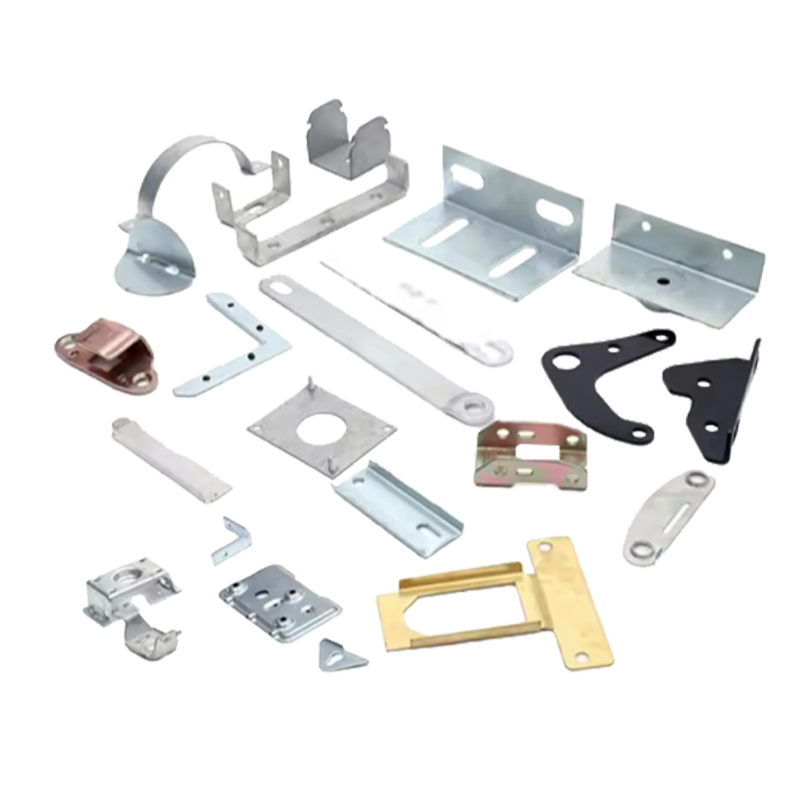
Los fabricantes de vehículos y los instaladores más grandes rara vez compran soportes de catálogo. Piden hardware de montaje formado para que coincida con una curvatura de techo, un marco de panel y una línea de ensamblaje específicos, lo cual es un trabajo para un socio de estampado de metal en lugar de algo que se saca de un estante de hardware. Como ejemplo de cómo funciona esto, Ningbo Dasheng Metal Products fabrica soportes según dibujos o muestras, comenzando con la selección de materiales y el diseño interno de herramientas, y luego ejecutando estampado, doblado, soldadura, tratamiento de superficies, ensamblaje y embalaje en una sola fábrica certificada según ISO 9001:2015. Las prensas de 4 T a 1000 T forman piezas de hasta 1300 x 1000 mm y 20 mm de espesor, la embutición profunda alcanza 450 mm de profundidad y 1000 mm de diámetro, y la capacidad anual es de aproximadamente cinco millones de piezas, con una gama de piezas de estampado de metal de precisión dando una idea del hardware involucrado. Para un comprador, esto significa que los soportes de esquina, los separadores y las piezas del marco se pueden fabricar con el patrón de orificios y la curvatura exactos de un techo determinado, en acero inoxidable 304, aluminio o acero con recubrimiento en polvo, a volumen de producción en lugar de precio por pieza.
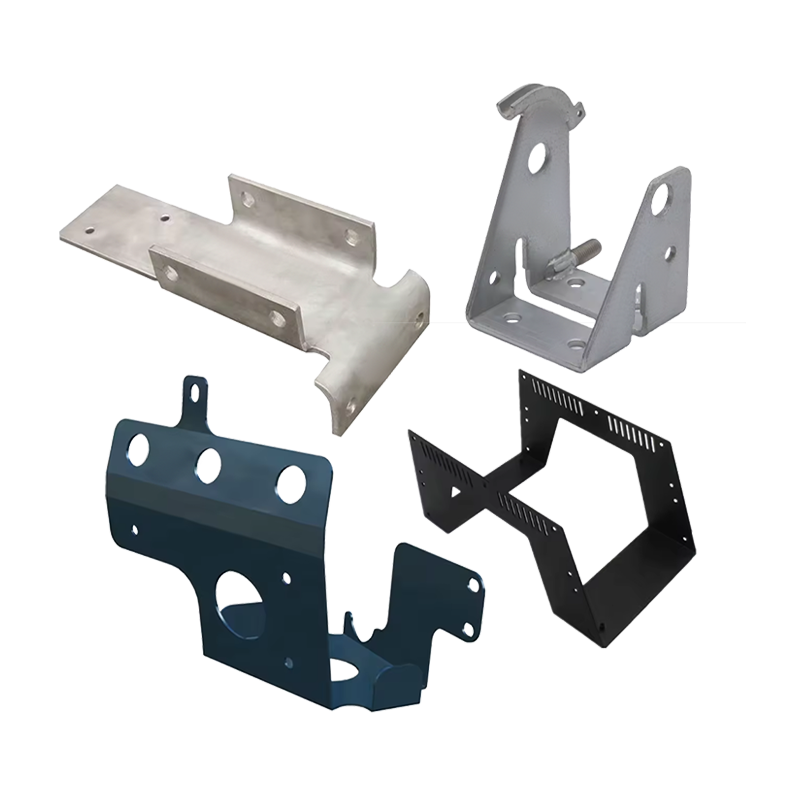
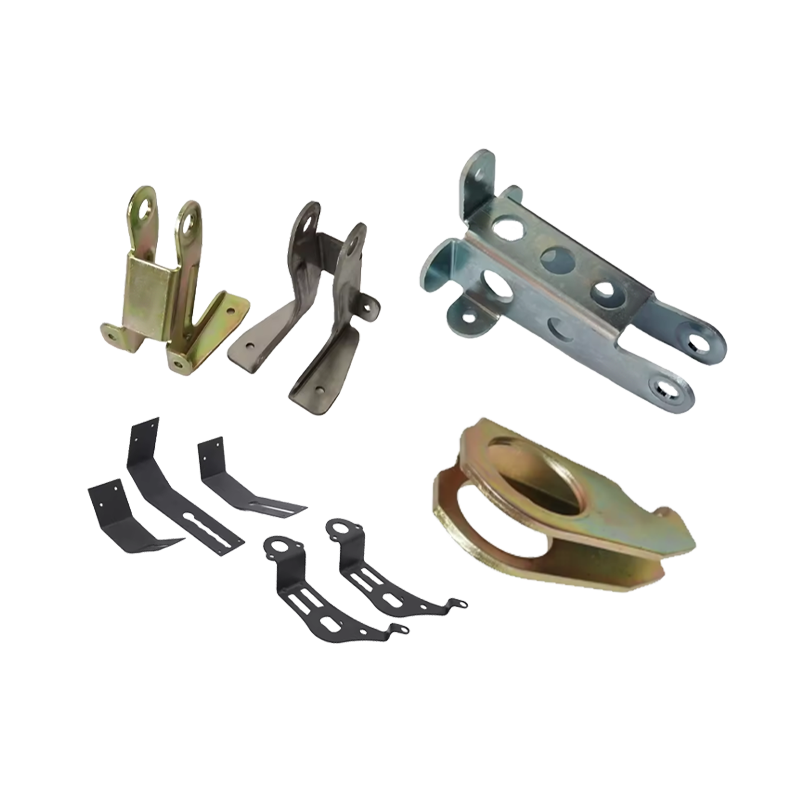 Piezas de marco soldadas de aluminio y acero con recubrimiento en polvo Piezas de marco dobladas y soldadas fabricadas en una sola instalación desde la selección del material hasta el recubrimiento. Vale la pena revisarlo cuando los soportes de montaje del catálogo no coinciden con una curvatura de techo, un patrón de orificios o un marco de panel específicos y se necesita hardware personalizado. Ver producto →
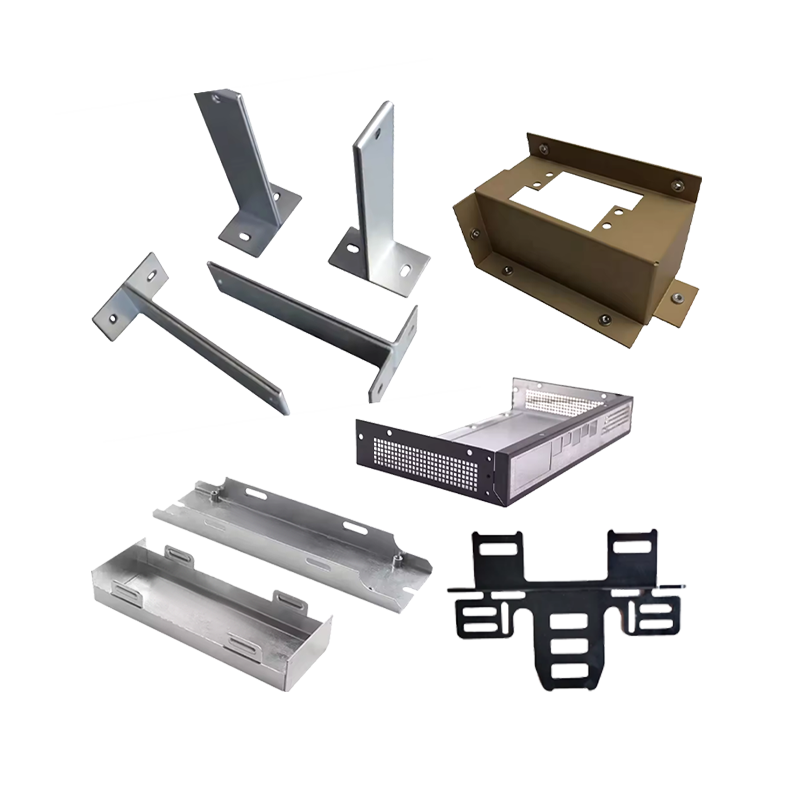
 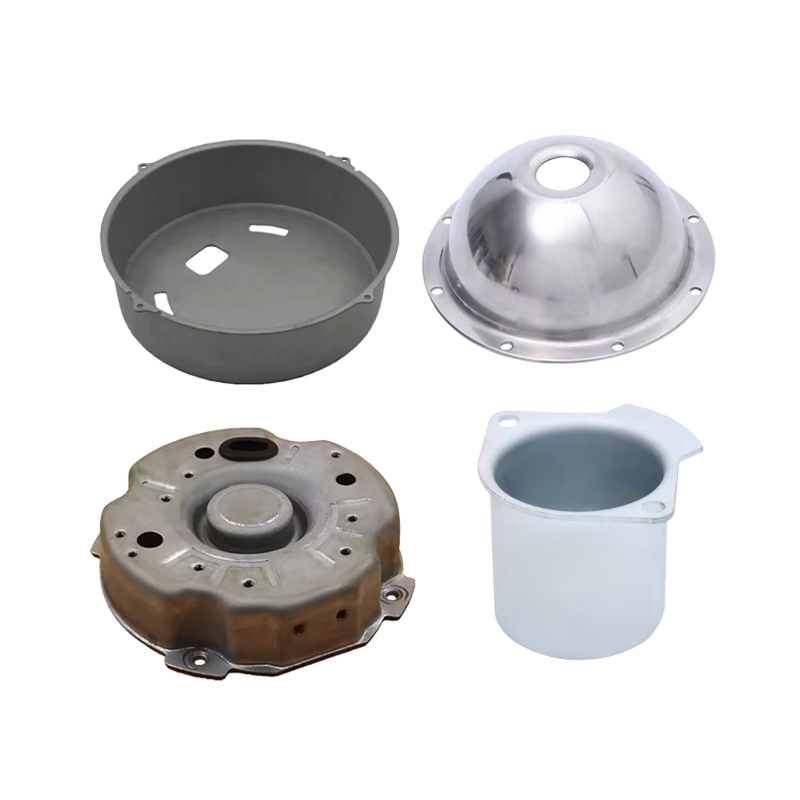 Piezas de estampado de chapa metálica de embutición profunda y doblado Servicios de estampado, plegado y embutición profunda produciendo piezas de hasta 1300 x 1000 mm de diversos metales. Útil para compradores que necesitan soportes de esquina, separadores o herrajes de montaje personalizados en acero inoxidable, aluminio o acero revestido en un volumen de producción. Ver producto →
 Una breve lista de verificación de compras
- Identifique la construcción del techo y elija un método de fijación que alcance un respaldo sólido.
- Haga coincidir el material del soporte, el grosor y el grado del sujetador, y evite contactos desnudos de metales diferentes.
- Confirme que el soporte proporcione al menos 20 mm de flujo de aire debajo del panel para enfriar.
- Para los herrajes de inclinación, verifique el mecanismo de bloqueo y su retención de torque bajo vibración.
- Obtenga del proveedor por escrito las especificaciones de grado, espesor y recubrimiento del material.
- Planifique una inspección de torque y sellador después del primer viaje largo y luego cada temporada.
Para la mayoría de los sistemas de casas rodantes de un solo panel, los soportes en Z estampados o los soportes de esquina en acero inoxidable 304 o aluminio con recubrimiento en polvo, atornillados al respaldo, siguen siendo la respuesta práctica. Los techos curvos y las matrices más grandes justifican el costo adicional de los rieles o los herrajes inclinables. Y cuando ninguna pieza del catálogo coincide con el techo, un fabricante que estampa, dobla, suelda y recubre en una sola instalación puede convertir un dibujo en soportes que se ajustan a la primera y permanecen instalados durante la vida útil del vehículo.
Pasamanos para piscina de acero inoxidable 316: grado, fabricación y guía personalizada
Guía de pestillos para puertas de armarios de caravanas: tipos, materiales y consejos de abastecimiento para constructores de vehículos recreativos
productos relacionados
Enviar una consulta
¡No dudes en contactarnos cuando nos necesites!
Ya sea que desee convertirse en nuestro socio o necesite nuestra orientación profesional o apoyo en la selección de productos y soluciones de problemas, nuestros expertos siempre están listos para ayudar en un plazo de 12 horas en todo el mundo.
Contáctenos
Teléfono: +86 18157484296
FAX: +86 574-86150176
Correo electrónico: [email protected]
Dirección: Unidad 2, Edificio 19, Parque Zhichuangzhizao, Zona Industrial Chengdong, Xiangshan, Ningbo,315705, Zhejiang, China
categoria de producto
Móvil